

What Kind of Life Are You Actually Building?
Take a few minutes to pause, reflect and consider where your daily habits, thoughts, behaviours and choices are leading you.
It’s easy to get swept away in our routines and busy schedules and keep on keeping on, but do you ever pause to ask yourself where all that effort is really going?
Why not take a moment now and ask yourself:
What kind of life do I want - and what kind of life am I actually building?
Where is all that effort really going?
And where are your daily, automatic habits leading you?
From the food you buy and eat, to the people you spend time with, the work you do, the media (or social media) you consume, how much or how little you move your body, and even how you habitually think – it all adds up to the life you are living.
Most people don’t lack knowledge, ambition, or hope. What’s often missing is the space to reflect and intentionally choose the direction of their life – their health, relationships, work, and wellbeing.
If you need support to get clear on what matters to you now, and to set goals that are meaningful and achievable, our free Seeds of Success goal setting guide is designed to help you do exactly that.
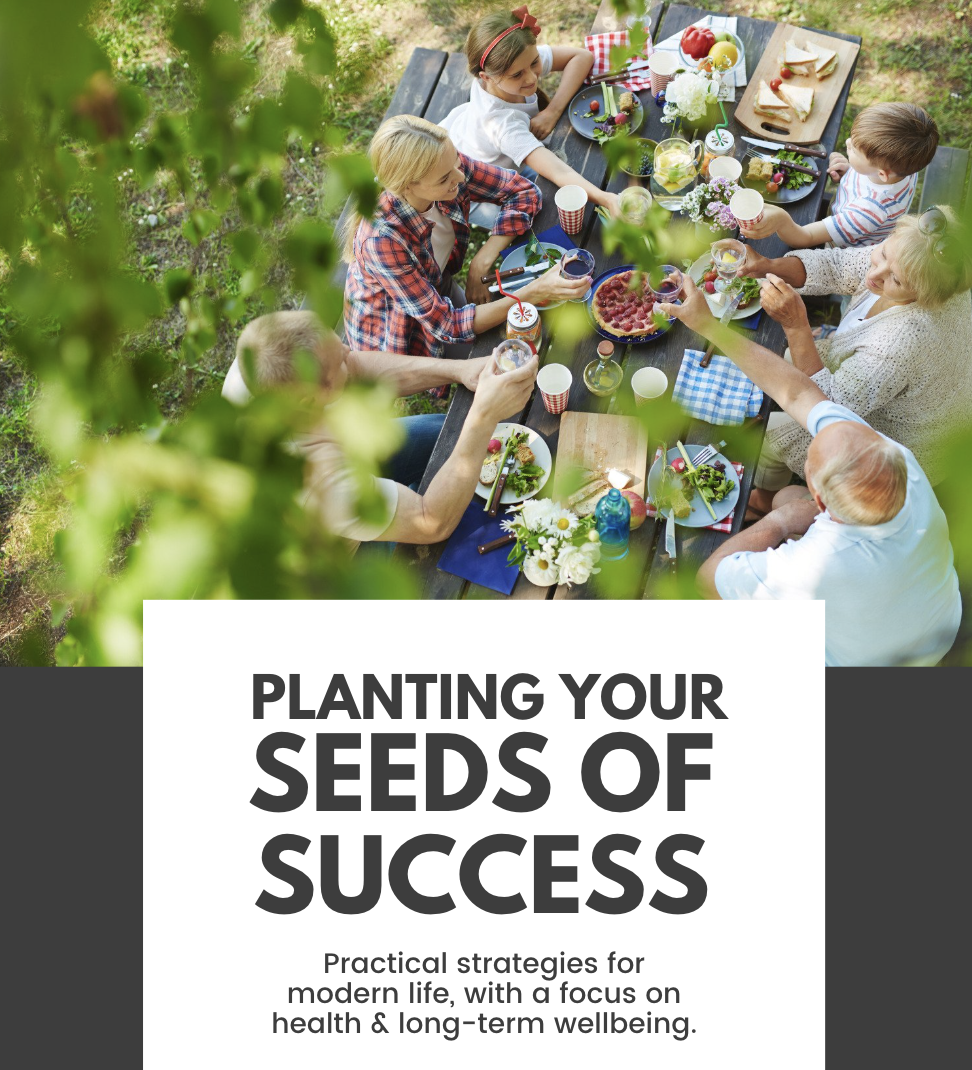
This blog is from a 3-part series of emails we sent to our subscribers, when you Download the guide here, you can also join our mailing list and receive helpful health and wellness tips right to your inbox.
Life coaching can also be a powerful support, offering structure and guidance to help clarify goals, recognise obstacles, and develop practical strategies to move forward.
When You Realise You Need to Change Course
If reflection shows that you’re not quite heading in the direction you want, it usually means making some changes.
Sometimes that change is a clear decision, for example:
Changing jobs
Ending a relationship
Working with a health professional on specific goals
Booking the flights and finally committing to long-held travel plans
Quite often though, the changes people want to make aren’t about these one-off decision, but about the daily decisions - it’s about habits.
Common habit changes people struggle with include:
What and how they eat
How much (or how little) they exercise or move their body
Screen time and scrolling limits
Healthy sleep routines
Communicating needs and boundaries in relationships
If changing habits was simply about knowing better, we’d already be living exactly how we want to be.
It’s obviously not that simple - or easy.
Why “Just Trying Harder” Rarely Works
Making the healthier choice is difficult when you’re used to old habitual behaviours and reactions.
In the moment where you could choose differently, your ability to make that choice depends on:
Energy and stress levels
Fatigue and sleep quality
Emotional load
Physical pain or illness
External pressures and expectations
So, when you fall back into old habits, it’s not because your willpower has failed.
Willpower gets depleted as these factors wear down your capacity.
This is why dramatic overhauls and New Year’s resolutions rarely stick.
Lasting change is usually built through goals that feel smaller but are achievable:
Smaller steps
Steadier progress
Fewer extremes
When habits are introduced with respect for your current capacity, they’re far more likely to last than bursts of motivation followed by burnout, giving up, or self-criticism.
If you’ve found yourself wondering why you keep “falling off the wagon,” it’s rarely a lack of discipline or willpower.
It’s usually a mismatch between what you’re asking of yourself and what your body, mind, and nervous system can realistically sustain.
Your Nervous System is an overlooked factor in change
One of the most overlooked factors in making change stick is your nervous system.
Your nervous system is how you experience the world, and many people are currently living with:
Constant stimulation
Information overload
Increasing work or financial pressures
Worries about the state of the world
Ongoing stress
Your nervous system feels it all.
At a basic level, your body just wants to keep you safe.
For the nervous system, safety often means familiarity. When the body is under chronic stress, pain, illness, or emotional overwhelm, even positive changes can feel threatening.
In these states:
Old habits resurface more easily
Resistance to new choices or behaviours increases
Consistency becomes harder
This is why nourishing your body and allowing time for genuine rest and recovery isn’t indulgent.
It’s essential.
Rest, Recovery, and Capacity for Change
Sometimes you can push yourself until a new habit forms.
Other times, it’s not about pushing harder.
It’s about creating more capacity so your body and mind feel safe enough to change.
To form new habits, you need consistency. Rest, recovery, and nervous system support are what make consistency possible.
Without them, even the best intentions struggle to translate into action.
How Natural Health Care Can Support Sustainable Change
This is where holistic and natural health care can make a meaningful difference, not by asking you to do more, but by supporting your body and mind so you have:
More “bandwidth” or capacity
Greater tolerance to change
Better access to energy, motivation and willpower
Support may include:
Naturopathy to nourish depleted systems and support nervous system health
Acupuncture to help release stress and restore energy
Remedial therapy or osteopathy to reduce physical strain and improve alignment
Hypnotherapy to help shift subconscious patterns that make change feel harder than it needs to be
When your system feels supported, making healthier choices becomes more accessible and sustainable.
Building Your Life, Steadily and Supported
If you’re ready to build your health and your life in a way that feels steady, realistic, and supported, our team is here to help.
Call us on 08 9328 9233 to speak to our friendly front desk team to find out about our services or practitioners that can help, book online now.